
How to Make AI Dance Video: 7 Easy Steps for Beginners
Image placement: Place Image 1 immediately below the H1 and before the first paragraph.
Have you ever watched a photograph, avatar, or digital character suddenly start dancing and wondered how the video was created? What once required animation software, motion capture, professional editing skills, and a considerable amount of time can now be explored with artificial intelligence.
Learning how to make ai dance video has become much easier because modern AI tools can generate movement from images, text prompts, motion templates, and reference videos. You do not necessarily need to be a professional animator, filmmaker, or even a dancer to experiment with this technology.
That does not mean every AI-generated dance video will automatically look realistic. The quality of your starting image, the movement you choose, the AI tool you use, and the way you describe the action can all influence the final result. Understanding these basics is the first step toward learning how to make ai dance video successfully.
In this guide, you will learn how to make ai dance video from a photograph, character, or motion reference. You will also understand how to make dance video with AI without dancing yourself, how AI baby dance videos are created, which AI tools you can explore, and how to make your final video suitable for platforms such as Instagram Reels and YouTube Shorts.
The goal is simple: by the end of this article, you should understand how to make ai dance video step by step and know which workflow is most suitable for your idea.
What Is an AI Dance Video?
An AI dance video is a video in which artificial intelligence generates or transfers movement to a person, character, avatar, or image. Instead of manually animating every arm movement, body position, and step, AI technology uses visual information and instructions to create motion.
There are several ways an AI dance video can be generated. In some cases, you upload a still photograph and ask the AI to animate it. In other cases, you provide a reference video containing a particular movement, and the AI attempts to transfer that motion to another character.
This is why understanding how to make ai dance video begins with understanding the type of result you actually want.
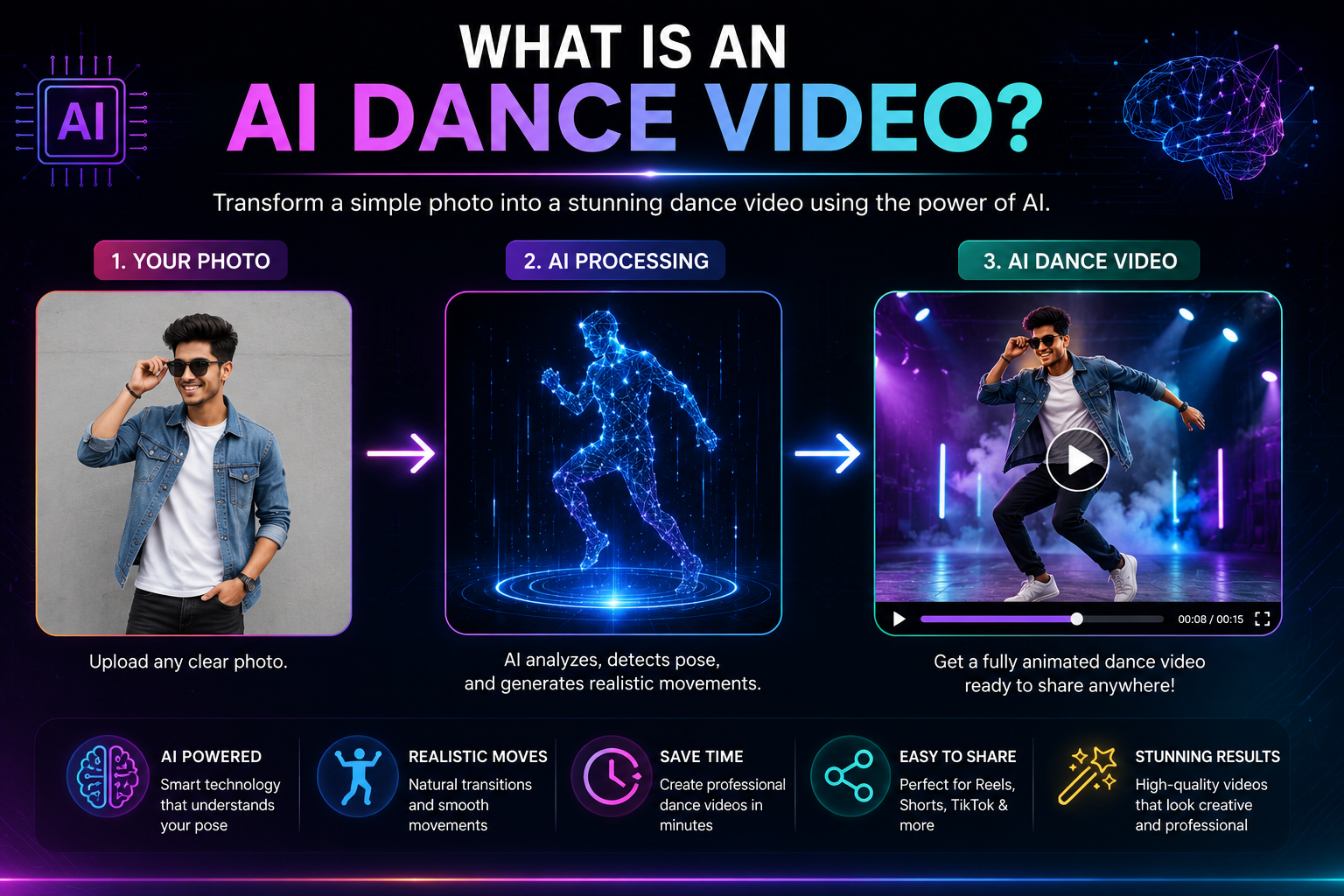
For example, one creator may want to turn a personal photograph into a short dance video. Another may want to create a completely fictional virtual dancer. Someone else may be interested in making entertaining content for social media using an AI-generated baby-style character.
Although the workflows can differ, the basic objective remains similar: you provide the AI with a visual starting point, movement information, or creative instruction, and the system generates a video.
This is also why there is no single answer to how to make ai dance video. The best method depends on whether you want realistic motion, creative animation, precise motion transfer, or a completely original AI-generated scene.
Different Types of AI Dance Videos You Can Create
Before you begin learning how to make ai dance video, take a moment to decide what type of video you actually want to produce.
Choosing the right format from the beginning can save you time and help you select a more suitable AI tool.
Photo-to-Dance Videos
A photo-to-dance video starts with a still image. You upload a photograph, and an AI system attempts to animate the subject into movement.
This is one of the simplest approaches for beginners who want to understand how to make ai dance video from a photo. A clear image can provide the AI with useful information about the person’s appearance, clothing, posture, and environment.
For the best starting point, try to use an image where the main subject is easy to see. If the goal is a full-body dance sequence, a full-body or reasonably visible body image can be helpful.
Motion Transfer Dance Videos
Motion transfer is useful when you want a character to perform a particular type of movement.
Instead of simply asking the AI to invent a dance, you can provide a reference video or select a motion template. The AI then attempts to use that movement as guidance for animating your chosen character.
This approach can be particularly useful when learning how to make ai dance video with more control over the final movement.
Learn actual dance forms and movement styles
AI Avatar Dance Videos
You do not always need to use a real photograph. You can create or use a fictional digital character and animate it into a dance sequence.
This approach is useful for virtual creators, entertainment content, gaming-style videos, fictional personalities, and creative brand campaigns.
For some projects, learning how to make ai dance video with a fictional character may actually be easier because you have complete creative control over the visual identity of the character.
AI Baby Dance Videos
AI baby dance videos are another popular form of AI-generated entertainment content. The process generally involves using a suitable fictional character or image and animating it with playful movement.
Keywords such as how to make baby dance ai video, how to make ai baby dance video, and how to make baby ai dance video are different variations of the same basic search intent.
The workflow remains similar: choose the character, choose or describe the movement, generate the video, and review the result.
What Do You Need to Make an AI Dance Video?
One reason many beginners are interested in how to make ai dance video is that the process does not necessarily require a professional studio or expensive production equipment.
In many cases, you only need a good starting image, an idea of the movement you want, and access to an AI video-generation tool.
A Clear Starting Image
If you are beginning with a photograph, image quality matters.
A blurry image, heavily distorted face, or unclear body position can create problems because the AI has less reliable visual information to work with.
For example, Runway’s image-to-video prompting guide explains the importance of using a high-quality input image and notes that visual artifacts can become more noticeable during video generation.
This becomes especially important when learning how to make ai dance video from a photo, because the image is the foundation of the generated animation.
A Clear Idea of the Dance Movement
Before generating the video, decide what type of movement you want.
You might want energetic freestyle movement, a simple rhythmic sequence, fitness dance, hip-hop-inspired movement, contemporary-style movement, or a short choreography designed for social media.
The more clearly you understand the type of movement you want, the easier it becomes to decide how to make ai dance video using the appropriate workflow.
An AI Video Generation Tool
The final requirement is an AI platform capable of generating movement from an image, prompt, or reference video.
For example, Viggle AI offers image-to-video and motion-related workflows.
Viggle’s image-to-video workflow allows users to upload an image and work with motion templates or reference-based movement.
Another option is Runway.
Runway supports AI video generation workflows that can begin from text, images, or video inputs.
You can also explore Kling AI for image-to-video generation.
The most important point is not to assume that one tool will be perfect for every project. The best option for how to make ai dance video depends on the level of movement control and creative freedom you need.
How to Make AI Dance Video in 7 Easy Steps
Now let us move to the practical part.
The exact buttons and settings will vary depending on the AI platform you choose, but the basic process of how to make ai dance video can usually be understood through the following seven steps.
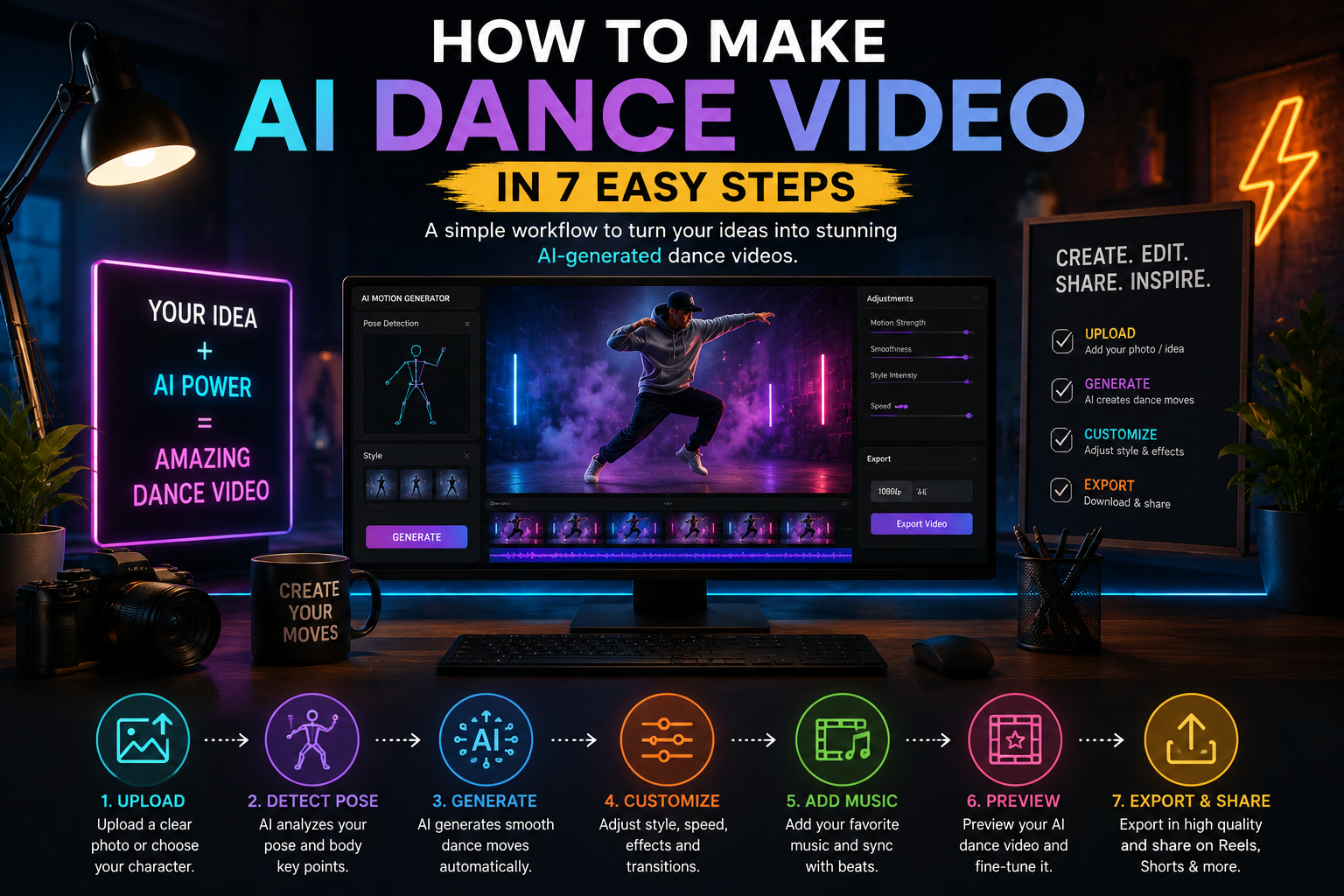
Step 1: Decide What Type of AI Dance Video You Want
The first step in how to make ai dance video is deciding what you want to create.
Do you want to animate a real photograph? Do you want a fictional AI avatar? Do you want to transfer a particular dance movement from a reference video?
Answering these questions before opening the AI tool will make the process much easier.
If you are a beginner, start with a short and simple concept rather than attempting an advanced dance sequence immediately.
Step 2: Prepare Your Image or Character
The next step in how to make ai dance video is preparing your starting visual.
Choose an image where the main subject is clearly visible. Avoid extremely low-quality photographs or images where the face and body are heavily hidden.
If your goal is a full-body dance video, try to use an image where the AI can reasonably understand the subject’s body.
A good starting image does not guarantee a perfect result, but it can reduce unnecessary visual problems.
Step 3: Choose the Dance Motion
Once your character or image is ready, decide what movement you want.
Some AI tools offer built-in templates, while others allow you to use a separate reference video.
For example, Viggle provides a workflow where users can upload an image and work with motion templates or uploaded motion references.
When learning how to make ai dance video, it is often better to start with clear, simple movement. Extremely complicated choreography may create more visual inconsistencies.
Step 4: Write a Clear Motion Prompt
If your chosen AI platform uses text prompts, describe the movement clearly.
A vague prompt such as:
“Make this person dance.”
may give the AI too little information.
Instead, try describing the movement more clearly:
“Create a realistic full-body dance performance with energetic rhythmic movement, natural arm motion, balanced footwork, and smooth transitions.”
When understanding how to make ai dance video, remember that longer prompts are not automatically better. The important thing is communicating the movement and action clearly.
Runway’s guidance for image-to-video prompting similarly focuses on describing the motion and progression you want to happen.
Step 5: Generate the First Version
Now you are ready to generate your first video.
One of the most important things to remember about how to make ai dance video is that your first generation may not be perfect.
The face may change slightly. The hands or feet may look unusual. The movement may not be exactly what you imagined.
Do not immediately abandon the idea. Generate another version after changing one or two important elements.
Try adjusting the starting image, simplifying the motion, or rewriting the prompt.
Step 6: Review the AI Dance Carefully
Generating the video is not the final step.
Watch the complete result carefully and check whether the movement looks natural.
Look at the face, arms, hands, legs, feet, and transitions between movements.
The purpose of learning how to make ai dance video is not simply to make something move. The objective is to create a result that looks visually convincing and works for your intended audience.
Step 7: Edit and Export the Final Video
Once you have a version you like, you can prepare it for publishing.
You may add music, captions, text, transitions, or other editing elements. However, do not overload the video simply because it was generated with AI.
A clean, focused video can often be more effective than one filled with unnecessary effects.
This completes the basic process of how to make ai dance video.
How to Make AI Dance Video From a Photo
One of the easiest methods for beginners is learning how to make ai dance video from a photo.
The basic idea is straightforward: you upload a still image and use an AI platform to generate movement.
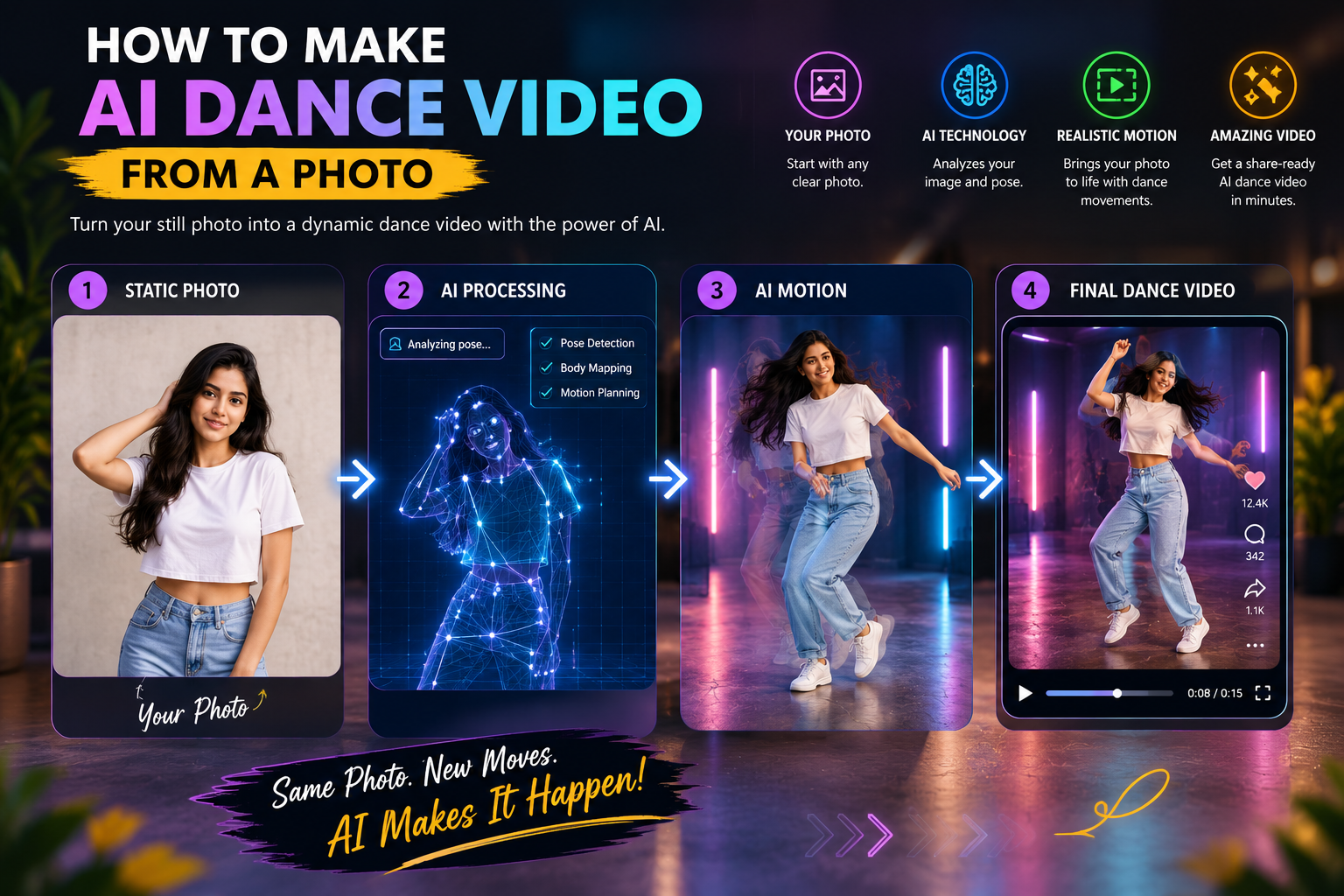
The process generally follows this structure:
Choose Photo → Upload to AI Tool → Select or Describe Movement → Generate Video → Review → Edit
This method can be useful if you do not want to record yourself dancing or if you want to experiment with a character that does not physically exist.
When learning how to make ai dance video from a photo, try to choose an image that gives the AI enough information about the subject.
A clear image can make it easier to maintain a consistent appearance throughout the generated sequence.
Viggle’s official image-to-video tool provides an example of this type of workflow, allowing users to begin with an image and combine it with a motion template or reference video.
This can be particularly useful for creators who want more control over how to make ai dance video using a specific movement reference.
How to Make Dance Video With AI Without Dancing Yourself
One of the biggest advantages of AI motion technology is that you do not necessarily need to perform the dance yourself.
If your goal is to understand how to make dance video with ai without physically recording your own performance, motion templates and reference videos can provide an alternative workflow.
You can choose a character, image, or avatar and then provide the AI with information about the movement you want.
The system then attempts to animate the character accordingly.
This can be useful for experimenting with creative ideas, virtual dancers, fictional characters, or social-media content.
However, there is an important difference between generating movement and understanding dance.
Real dance involves timing, rhythm, coordination, body awareness, musicality, expression, and intentional movement.
How to Make AI Baby Dance Video
If you are searching for how to make ai baby dance video, the basic workflow is similar to other AI dance-generation methods.
Start by choosing a suitable fictional character or image. Then select a playful movement or motion reference and generate a short sequence.
Simple movement is often a better starting point than complex choreography. A short, clear animation makes it easier to identify problems and generate an improved version.
The process can be understood in six simple stages:
- Choose the image or fictional character.
- Upload it to the AI tool.
- Select or describe the dance movement.
- Generate a short video.
- Review the movement and appearance.
- Create another version if needed.
The same basic process applies whether someone searches how to make baby dance ai video, how to make ai baby dance video, or how to make baby ai dance video.
In each case, the core idea is to animate a suitable character using AI-generated or reference-based motion.
When working with images of real people, especially children, make sure you have the appropriate rights and permissions to use the material.
Best AI Tools for Making an AI Dance Video
Choosing the right platform can make a significant difference when learning how to make ai dance video.
There is no universal “best” tool because different platforms focus on different types of AI video generation.
|
AI Tool |
Best For |
Main Workflow |
|---|---|---|
|
Viggle AI |
Motion transfer and dance references |
Image + motion |
|
Runway |
Creative AI video generation |
Image, text, or video |
|
Kling AI |
Image-to-video generation |
Image + motion description |
Viggle AI for Motion-Based Dance Videos
Viggle is particularly relevant if your main objective is how to make ai dance video using a particular motion or dance reference.
Its AI Dance Generator describes a process where users upload a character image and combine it with a dance template or motion clip.
For creators who want movement control rather than completely random animation, this type of workflow can be worth exploring.
Runway for Creative AI Video Generation
Runway can be useful when your goal goes beyond simple dance transfer.
You may want to create a cinematic environment, experiment with camera movement, or generate a creative sequence based on an image and written instructions.
This flexibility can be useful when learning how to make ai dance video as part of a larger creative project.
Kling AI for Image-to-Video Animation
Kling AI is another platform that supports image-to-video workflows.
You can begin with an image and provide instructions about the type of movement you want to generate.
If your main focus is experimenting with image animation, Kling AI can be another option to evaluate while learning how to make ai dance video.
Tips to Make Your AI Dance Video Look More Realistic
Once you understand the basic process of how to make ai dance video, the next goal is improving the quality.
Use a High-Quality Starting Image
Your starting image matters.
Try to use an image with a clear subject and reasonably visible facial and body details.
Poor-quality visual information can create additional challenges during animation.
Keep Important Body Parts Visible
Dance involves full-body movement.
If the AI has very little information about the body, it may need to invent more details during generation.
For this reason, a reasonably clear full-body image can be useful when learning how to make ai dance video.
Start With Simple Movement
Do not immediately choose the fastest or most complicated choreography.
Start with basic rhythmic movement and see how the AI handles it.
Once you get a good result, experiment with more difficult sequences.
Generate Multiple Versions
AI generation is not always consistent.
One result may have excellent movement but an inconsistent face. Another may have better visual consistency but weaker movement.
Generating multiple versions is often part of the normal workflow when learning how to make ai dance video.
Keep the First Video Short
A short video is easier to review.
Instead of trying to create a long performance immediately, start with a few seconds of movement.
Once you are satisfied with the result, you can create additional clips and combine them during editing.
Common Problems When Making an AI Dance Video
Even after learning how to make ai dance video, you may encounter some common problems.
The Face Changes During the Video
Character consistency can sometimes be difficult for AI systems.
Try using a clearer starting image or generating a shorter sequence.
The Hands or Feet Look Unusual
Hands and feet are common areas where AI-generated motion can become inconsistent.
Try simplifying the movement or changing the starting image.
The Dance Does Not Look Natural
If the movement looks unnatural, the reference may be too complicated or the prompt may not clearly communicate what you want.
Start with a simpler movement before increasing complexity.
The AI Does Not Follow the Reference Properly
Different AI platforms offer different levels of motion control.
If following a particular dance reference is extremely important, use a tool specifically designed for motion transfer.
Understanding these limitations is an important part of learning how to make ai dance video realistically.
H2: How to Create AI Dance Videos for Instagram Reels and YouTube Shorts
If your goal is to publish the result on social media, you should think about the final platform before generating the video.
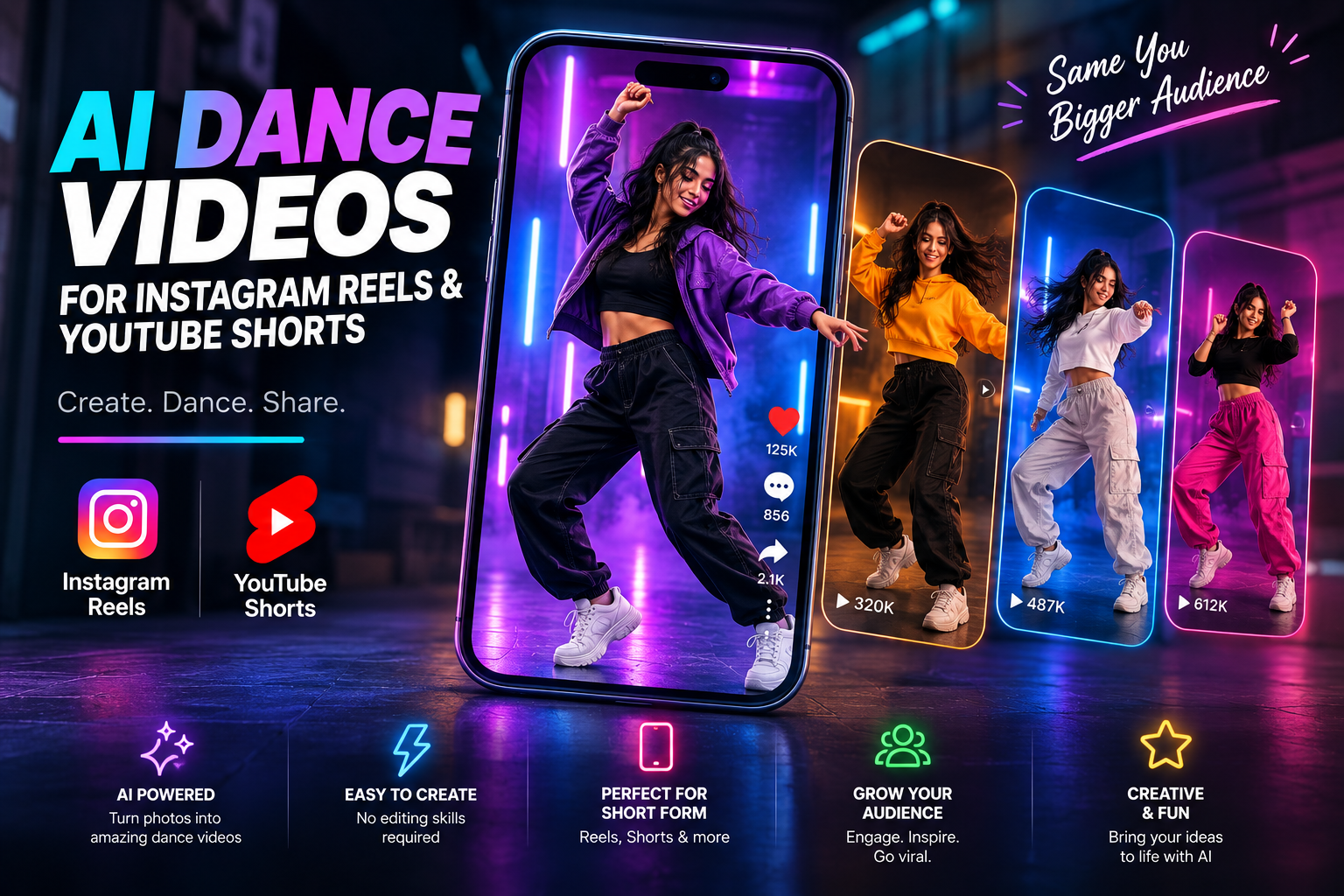
Instagram Reels and YouTube Shorts generally work well with vertical video.
Keep the main character clearly visible and avoid placing important visual elements where platform buttons or text overlays may cover them.
When learning how to make ai dance video for social media, remember that the first few seconds are important.
Start with an interesting movement or visually engaging moment instead of spending too much time on an introduction.
A focused AI dance video can often perform better than a complicated video filled with unnecessary effects.
If readers are interested in understanding how real dance routines are created, add an internal link here.
Can AI Create a Dance Video From Just One Photo?
Yes, depending on the platform and workflow, a single image can be used as the starting point for an AI-generated dance video.
The AI uses the photograph as a visual reference and then generates movement based on a prompt, motion template, or reference video.
This is why how to make ai dance video from a photo has become an increasingly accessible workflow for beginners.
The quality of the final result will depend on the input image, the complexity of the movement, and the capabilities of the AI model.
For best results, start with a clear image and a relatively simple movement.
Frequently Asked Questions About How to Make AI Dance Video
Can I make an AI dance video for free?
Some AI platforms offer limited free access, trials, or free credits. Additional generations, higher-quality exports, or advanced features may require a paid plan.
Always check the current pricing and usage limits on the official website before choosing a platform.
Can I make an AI dance video from one photo?
Yes. This is one of the most common methods for learning how to make ai dance video. You can upload a clear photograph and use an image-to-video or motion-transfer workflow to animate it.
How do I make dance video with AI without dancing?
You can use a fictional character, a photograph, a motion template, or a reference video. The AI can use this information to generate movement without requiring you to perform the dance yourself.
What is the best AI tool for making a dance video?
The best tool depends on your objective. For motion-reference workflows, a platform focused on controllable movement may be useful. For creative image-to-video generation, a broader AI video platform may provide more flexibility.
How do I make an AI baby dance video?
Choose a suitable fictional character or image, select simple movement, generate a short video, and review the result. The same basic principles of how to make ai dance video apply here.
Why does my AI dancer look unnatural?
The starting image may not provide enough clear information, the movement may be too complex, or the AI model may struggle with certain actions. Try simplifying the movement or using a better starting image.
Do I need to know how to dance to create an AI dance video?
No. You can learn how to make ai dance video without personally performing the dance. However, basic dance knowledge can help you recognise whether movement looks natural and whether the AI-generated choreography makes sense.
Conclusion: Start Creating Your AI Dance Video
Learning how to make ai dance video does not require you to become an expert animator overnight.
Start with one clear image or character. Choose an AI platform that matches your goal. Decide whether you want prompt-based animation or motion transfer. Generate a short sequence and review the result.
The first attempt may not be perfect, and that is completely normal.
A major part of learning how to make ai dance video is experimentation. Changing the starting image, simplifying the movement, choosing a better reference, or improving the prompt can all create a significantly different result.
The best approach is to begin simply.
Once you understand how to make ai dance video, you can gradually experiment with different characters, dance concepts, camera ideas, movement references, editing styles, and social-media formats.
At the same time, AI-generated movement and real dance are not the same thing. Understanding real dance, rhythm, expression, coordination, and body movement can help you better evaluate and direct the AI-generated results.