
What is dance? Is it simply moving your body to music, or is there something more behind it?
The answer depends on who you ask.
For a child, dance might begin the moment their favourite song starts playing. For a professional, it can involve years of training, technique and discipline. For someone attending a wedding, dance may be about celebration. For another person, it may be a way to stay active, express emotions or build a career.
That is exactly why dance is difficult to explain in just one sentence.
In simple terms, dance is the intentional or expressive movement of the body, often connected with rhythm, music, emotion, culture or performance. But dance is much bigger than that definition. Dance is not just a series of steps; it is a form of performing art that uses the human body, movement, rhythm and expression to communicate ideas and emotions.
Today, dance exists on theatre stages, in dance studios, at competitions, on streets, in clubs and, increasingly, on social media. A beginner can learn a K-pop routine from a phone, discover Open Style choreography on Instagram, watch a whacking performance from another country and then decide to join a local dance class.
By understanding what is dance, beginners can look beyond memorising steps and start appreciating movement, rhythm, expression and creativity.
This beginner-friendly guide will help you understand what is dance, what is the meaning of dance, how different dance styles work, what is Hip Hop dance, what is contemporary dance, and how you can start learning—even if you have never danced before.
For a beginner, understanding what is dance is the first step towards learning how movement, rhythm, expression and creativity come together. At its simplest level, what is dance can be understood as purposeful movement that combines the body, rhythm, space and expression.
Understanding Dance & Its Elements
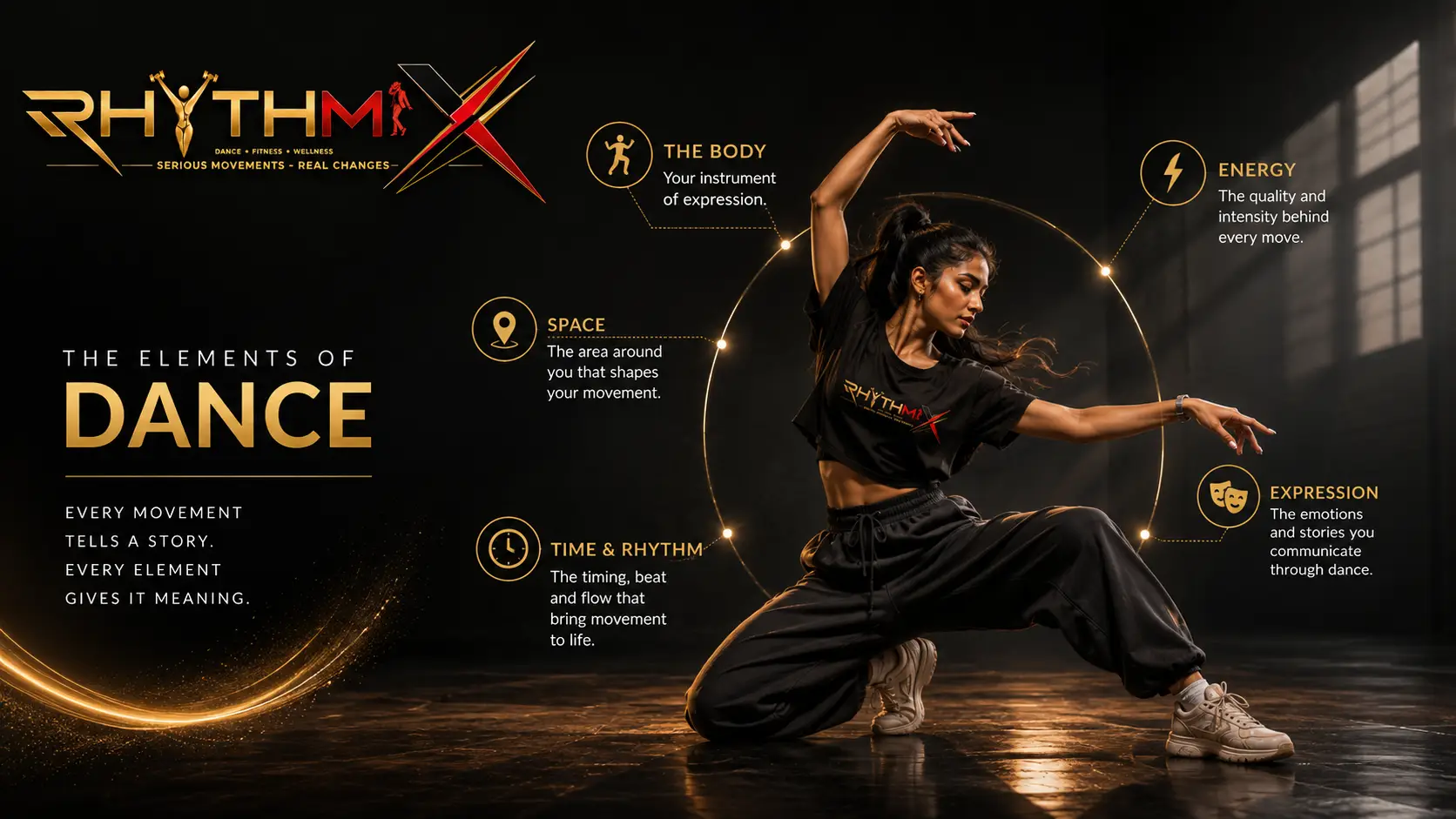
To understand what is dance, it helps to look at the basic elements that make movement meaningful. You do not need to know complicated technical terms before starting. At its core, dance involves the body, space, time, energy and expression.
To properly understand what is dance, it helps to look at the basic elements that shape every form of movement.
1. The Body
Your body is your main instrument in dance. You can dance using your whole body or focus on individual parts such as your hands, shoulders, chest, hips, head or feet.
One of the first things beginners learn is body awareness. This simply means understanding where your body is and learning how to control different parts independently.
For example, moving your shoulders while keeping your hips still may sound easy. Try it for the first time, and you may realise it requires more coordination than expected.
2. Space
Every dance movement happens somewhere.
You may move:
1. Forward or backward
2. Left or right
3. Up or down
4. In a straight line or a circle
5. Close to the floor or high into the air
Space becomes especially important in group choreography. Dancers use formations, pathways and levels to create visual patterns.
3. Time and Rhythm
Dance and timing go hand in hand. You can move quickly, slowly, suddenly or gradually. You can hit a strong beat, pause for a moment or move through several counts.
Beginners often think dancing means simply following the beat. But as you develop, you begin noticing more in the music—the drums, bass, lyrics, melody, pauses and accents.
That relationship between movement and music is called musicality.
4. Energy
Try performing the same movement in two different ways.
First, move softly and smoothly. Then perform the same movement sharply and powerfully.
The movement may technically be the same, but the feeling is completely different. That difference comes from energy.
Dance can feel:
1. Sharp
2.Smooth
3. Heavy
4. Light
5. Explosive
6. Relaxed
7. Aggressive
8. Controlled
5. Expression
Expression is what makes movement personal.
Two dancers can learn exactly the same choreography. They may perform the same steps, at the same time, to the same music. Still, they can look completely different.
Why?
Because of their personality, energy, musicality and interpretation. This is one reason learning dance is not only about memorising steps.
It is about learning how to make movement your own.
Looking at these elements together gives us a clearer answer to what is dance, because every style uses movement, time, space and energy in its own way.
Dance as Art: The Expressive Movement of the Soul
Have you ever watched a dance performance and felt something before you fully understood what was happening?
Maybe the dancer looked angry. Maybe they appeared heartbroken. Maybe the performance made you feel excited, uncomfortable or inspired.
The dancer did not necessarily need to say anything. The movement communicated it. This is one of the strongest reasons dance is considered an art.
Dance allows people to communicate feelings, stories, memories and ideas through the body.
A Contemporary dancer may use slow movement and stillness to communicate vulnerability. A Hip Hop dancer may use groove and musicality to express personality. A whacking performer may use dramatic arm movements and posing to create a powerful visual experience.
Sometimes dance tells a clear story.
Sometimes it leaves the interpretation to the audience.
And sometimes, the dancer simply moves because movement itself feels meaningful.
That is the beauty of dance as an expressive art.
This emotional connection is one reason why the answer to what is dance can be very personal for every dancer.
Dance as an Art Form
When we ask what is dance, we are also asking how movement can become a meaningful form of artistic expression.
Dance becomes an art form when movement is intentionally created, organised or performed to communicate something.
This may involve:
- Choreography
- Improvisation
- Music
- Costumes
- Lighting
- Storytelling
- Emotion
- Visual design
A choreographer makes decisions about how a performance will develop.
Which movement comes first?
Where should the dancer stand?
When should the movement suddenly stop?
Which musical moment deserves emphasis?
How should the audience feel at the end?
These decisions turn individual movements into a larger artistic experience. However, you do not need to be a professional choreographer to experience dance as art. If you hear a song and naturally respond by creating your own movement, you are already making creative choices.
You listen.
You interpret.
You move.
That creative process is an important part of understanding **what is dance**.
Dance as a Sport
Is dance a sport?
In many situations, absolutely.
Depending on the intensity and style, dancing can also contribute to your overall physical activity and fitness.
Competitive dancers train their bodies intensely. Depending on the style, they may work on:
1. Strength
2. Stamina
3. Flexibility
4. Balance
5. Coordination
6. Speed
7. Precision
8. Body control
Dancers also deal with rehearsals, competition pressure, performance schedules and physical fatigue.
At the same time, dance is not only about physical ability. Two dancers with similar strength and flexibility can create completely different performances. One may have stronger technique. Another may have better musicality. Another may have an exceptional ability to connect with the audience. This is why dance sits in an interesting space between art and athletic performance.
The answer to what is dance can also include its physical and athletic side, especially in styles that demand strength, stamina and control.
A dancer can train like an athlete while performing like an artist.
Problems in Defining Dance
You might think defining dance is simple.
But consider these questions:
Does dance always need music?
No.
Does it always need choreography?
No.
Does someone need to perform in front of an audience?
No.
Does dance always have to look beautiful?
Not at all.
A person may dance alone. They may improvise. They may follow a traditional cultural practice. They may perform a carefully planned stage production. They may dance in silence.
This is why there is no single definition that captures every form of dance.
When we ask “What is dance?”, we are really asking a broad question about human movement, creativity, culture and expression.
Dance can be structured or spontaneous. Traditional or experimental. Social or theatrical. Competitive or personal. And sometimes, it can be several of these things at the same time.
These different possibilities show why what is dance cannot always be answered with one short definition.
Dance and Diversity
Dance exists in almost every part of human culture. Understanding what is dance also means understanding how differently people and cultures express themselves through movement.
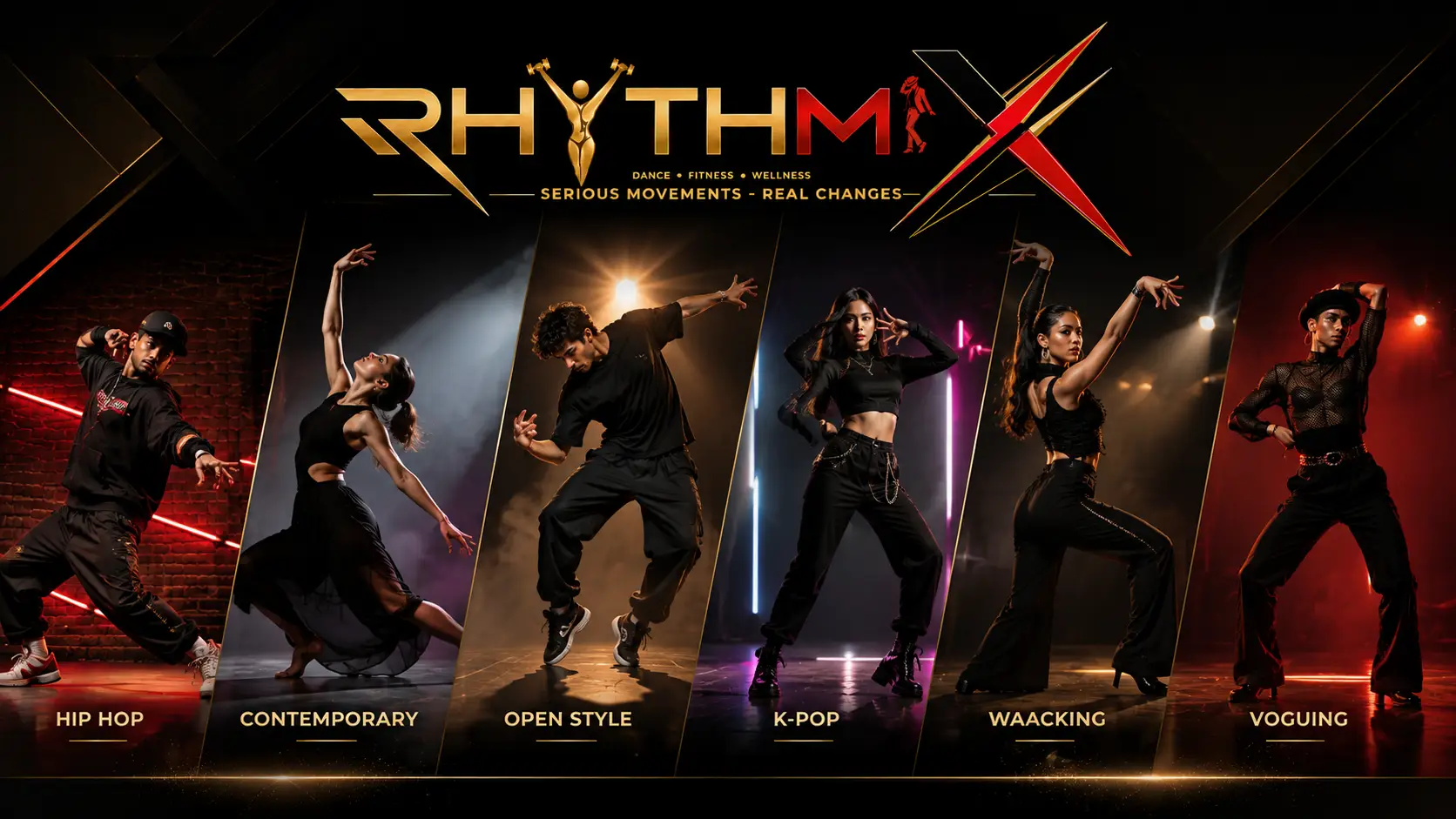
Different communities have developed their own ways of moving, celebrating, performing and telling stories. Some dance forms preserve cultural traditions that have been passed down for generations. Others were created in social spaces such as clubs, streets and community gatherings. Some developed through theatre. Others grew through competitions.
From traditional cultural performances to modern choreography, exploring what is dance also means recognising that movement can have different meanings in different communities.
India itself has a rich variety of dance traditions, from classical and folk forms to regional styles that carry stories, identity and cultural history.
For example, Chhau dance is recognised by UNESCO as part of India’s intangible cultural heritage.
Today, social media has created another major space for dance. A choreography created in one country can reach millions of people around the world within days.
The more we explore what is dance, the easier it becomes to see why different cultures have developed their own unique movement traditions.
But diversity in dance also means understanding that different styles have different histories.
For example:
1. Hip Hop is connected to a larger culture and history.
2. Breaking has its own foundations and vocabulary.
3. Whacking developed within specific club and LGBTQ+ communities.
4. Voguing is deeply connected to ballroom culture.
5. K-pop choreography developed within a modern entertainment industry but draws from many movement influences.
Types of Dances You Can Easily Learn
There is no single answer to what is dance, because dance can take many different forms across cultures and generations. One of the best things about dance is that there is no single style everyone must learn. The “right” style for you depends on your personality, music preference, fitness level and goals. The modern dance world is also much broader than the traditional list of Ballet, Jazz, Contemporary and Hip Hop. For someone asking what is dance, exploring different styles is often the easiest way to understand how broad and diverse the world of dance really is.
Here are some styles and dance approaches beginners may explore.
Hip Hop Dance
What Is Hip Hop Dance?
Hip Hop dance refers to dance practices connected to Hip Hop culture and its movement traditions. It is important to understand that Hip Hop is not simply a label for any choreography performed to rap or popular music. Hip Hop dance involves rhythm, groove, musicality, individuality and social movement traditions.
A beginner does not need to start with difficult choreography. In fact, learning these basics can be far more useful:
Groove → rhythm → foundations → musicality → freestyle → choreography
Once you understand how your body responds to music, learning choreography becomes easier. Hip Hop is a great option for people who enjoy energetic music, rhythm and personal expression.
Different styles offer different answers to what is dance, from expressive Contemporary movement to rhythm-based Hip Hop and social dance trends.
If you want to learn the foundations of this style with proper guidance, you can explore our Hip Hop dance classes in Silchar.
Contemporary Dance
What Is Contemporary Dance?
Contemporary dance is a broad and expressive approach to movement that often focuses on body awareness, space, emotion and movement quality.
It may include:
1. Floor work
2. Fluid movement
3. Changes in energy
4. Balance and control
5. Improvisation
6. Emotional expression
Contemporary is not simply about being flexible or performing slow movements. A strong Contemporary dancer also develops awareness of weight, momentum, timing and the relationship between the body and space. It can be a good choice for people who enjoy expressive movement and want to explore more than fixed dance steps.
Beginners who enjoy expressive and fluid movement can also explore our Contemporary dance classes.
Open Style Dance
Open Style has become increasingly popular as a term in modern choreography.
It usually refers to choreography that can draw inspiration from multiple dance styles rather than staying within one fixed movement vocabulary.
For example, one routine may include influences from:
1. Hip Hop
2. Jazz
3. Contemporary
4. Popping
5. House
6. Whacking
This does not mean Open Style replaces all these individual styles. The foundations and histories of those styles remain important. Open Style simply gives choreographers the freedom to combine different movement influences.
Why Did the Term “Urban Dance” Become Debated?
You may still hear the terms Urban Dance or Urban Choreography.
However, many dancers and dance platforms have moved away from using “Urban” as a broad category because it can blur the cultural origins of the movement styles being included.
The term Open Style is now commonly used in many choreography settings. However, it is not accurate to say that Urban Dance has been officially discontinued everywhere. Both terms can still be found in the dance world, depending on the community and context.
The important distinction is this:
Hip Hop is a culture and includes specific dance traditions. Open Style generally describes a choreographic approach that may draw from multiple styles.
They can overlap, but they are not the same thing.
Breaking
Breaking is one of the most recognised dance forms connected to Hip Hop culture.
It includes elements such as:
1. Toprock
2. Footwork
3. Freezes
4. Power moves
Breaking can be physically demanding, but beginners can start with basic movement before attempting advanced tricks.
Locking
Locking is energetic, playful and often recognisable through sudden stops, poses and expressive movements. It developed within funk dance culture and remains popular because of its musicality and personality.
House Dance
House dance is strongly connected with club culture and is known for groove, rhythm and fast footwork. It can be energetic, but beginners can begin by learning the basic groove and weight shifts before working on more complicated footwork.
Whacking
Whacking is known for expressive arm movements, posing, musicality and performance. It developed in Los Angeles club culture and has important connections with LGBTQ+ communities.
At first glance, the fast arm movements may look intimidating. But beginners can start by learning the basic arm pathways, poses and timing.
Voguing
Voguing is connected to ballroom culture and includes elements such as:
- Posing
- Lines
- Hand performance
- Dramatic presentation
Voguing has become more visible through popular culture and social media, but its cultural history should not be ignored.
Electro Dance
Electro Dance is a high-energy style associated with electronic music and influenced by the Tecktonik movement.
It often includes expressive arm movements, continuous body action and footwork. It can be a good choice for dancers who enjoy electronic music and fast-paced movement.
K-pop Dance
K-pop has become one of the biggest entry points into dance for younger audiences.
K-pop choreography often focuses on:
1. Synchronisation
2. Performance
3. Precision
4. Energy
5. Memorable “point” choreography
You do not need previous dance experience to start learning K-pop choreography.
However, beginners may initially find it challenging because routines can move quickly and require good coordination.
Freestyle
Freestyle means creating movement spontaneously instead of following a fixed choreography.
For beginners, freestyle can feel uncomfortable at first. You may feel like you do not know what to do.
That is normal.
Start with simple movement.
Step.
Bounce.
Change direction.
Respond to different parts of the music.
Freestyle gradually helps improve confidence, musicality and individuality.
New School Dance
“New School” is a term that may be used differently depending on the dance community and context. It is not always a single, universally defined dance technique.
Generally, the term is used in discussions around newer movement approaches that developed after earlier generations of street and Hip Hop dance. Because terminology can vary, it is always useful to understand how a particular teacher or studio uses the term before joining a class.
Popping
Popping is known for controlled muscle contractions or “hits” combined with rhythm and precise body movement. It requires control, timing and practice.
Beginners often enjoy learning basic hits, waves and isolations before moving towards more advanced combinations.
Viral Dance Moves and Social Media Trends
Modern dance culture cannot be discussed without mentioning the internet.
Some dance movements and routines have become globally recognised through social media and popular culture.
Examples include:
- The Dab
- Nae Nae
- Floss
- Shoot
- Milly Rock
- Woah
- Renegade
These moments helped bring dance to people who may never have attended a formal class. However, there is an important difference between a dance style and a viral dance move.
The Dab is not a complete dance style.
The Renegade is not a complete dance genre.
They are better understood as individual movements or viral choreographies. Social media can introduce someone to dance. Proper training can help them understand it more deeply.
The 4 Artistic Processes
Dance education is not only about copying a teacher and repeating movements. A deeper learning process can involve four connected areas.
1. Creating
Creating means developing movement ideas. This may include improvising, experimenting and building choreography.
A dancer might ask:
“What happens if I change the speed?”
“What if I move in a different direction?”
“What if I use the same movement with a different energy?”
This is where creativity begins.
2. Performing
Performing means presenting movement with intention.
This may happen:
- On stage
- In a competition
- In a studio
- In front of a camera
- At a social event
Performance is not only about remembering steps. It also involves confidence, energy, timing and connection.
3. Responding
Responding means watching, analysing and thinking about dance.
You may ask:
- What did I notice?
- What emotion did the performance create?
- How did the dancer use music?
- What could be improved?
Learning to observe dance can also help improve your own dancing.
4. Connecting
Dance does not exist separately from the world around it.
It connects with:
- Music
- History
- Culture
- Society
- Personal experience
- Other art forms
Understanding these connections gives dance more depth.
How to Be a Good Dance Teacher
Being an excellent dancer does not automatically make someone an excellent dance teacher. Teaching is a separate skill.
A good dance teacher remembers what it feels like to be a beginner. They understand that terms such as “eight counts,” “isolation,” “groove” and “musicality” may be completely new to someone.
A good teacher should:
1. Break complicated movements into smaller steps.
2. Demonstrate clearly.
3. Explain the timing.
4. Teach foundations.
5. Give useful corrections.
6. Encourage questions.
7. Adapt to different learning speeds.
8. Create a comfortable environment.
The best dance teachers do not make students feel embarrassed best dance teachers do not make students feel embarrassed for making mistakes. They help students understand that mistakes are part of learning they help students understand that mistakes are part of learning
How to Dance: A Beginner’s Guide
If you are completely new to dance, do not begin by choosing the most difficult choreography you can find online. Start with the basics.
1. Listen to the Music
Before moving, listen.
Try to find the main beat.
Tap your foot or clap along.
You are training your body to recognise rhythm.
2. Start with Simple Movement
You do not need a complicated step.
Try:
- Stepping side to side
- Shifting your weight
- Moving your shoulders
- Adding a simple bounce
The goal is to become comfortable moving.
3. Learn One Style at a Time
You do not have to master everything immediately. Choose one style that genuinely interests you. If you enjoy expressive movement, try Contemporary. If you enjoy rhythm and groove, explore Hip Hop. If you love K-pop music, start with beginner choreography.
Your interest will help you stay consistent.
4. Learn in Small Sections
Do not try to remember an entire routine at once. Learn eight counts. Repeat them. Then add another eight.
This is how most choreography becomes manageable.
5. Slow Down
Beginners often try to dance at full speed too quickly.
Slow practice helps you understand:
- Body positions
- Timing
- Weight transfer
- Transitions
Speed can come later.
6. Record Yourself
Watching yourself dance can be uncomfortable initially.
But it is one of the fastest ways to notice what you need to improve. You may discover that a movement felt bigger than it actually looked. Or you may notice that you are slightly ahead of the music.
These observations are useful.
7. Try Freestyle
Put on a song you enjoy.
Do not follow a tutorial.
Move.
There is no requirement to look impressive.
The goal is simply to build a relationship between your body and the music.
8. Practice Regularly
Consistency matters more than one intense practice session.
Even 20–30 minutes of focused practice several times a week can help you improve.
Once you understand what is dance, learning how to dance becomes less about copying every step perfectly and more about developing coordination and confidence. Before learning difficult choreography, it helps to understand what is dance and how your body responds to rhythm, timing and movement.
Who Can Learn Dance?
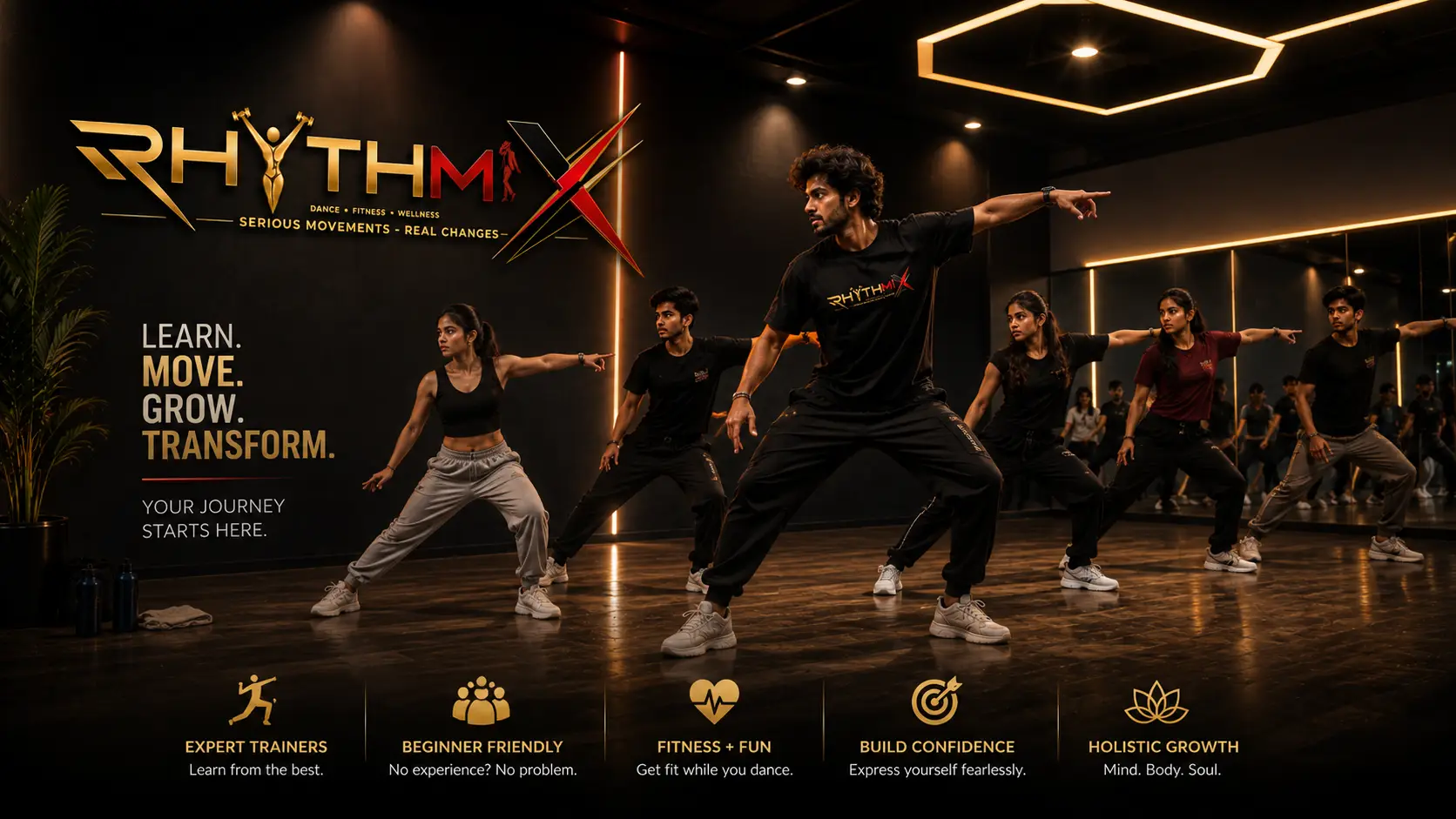
Understanding what is dance also helps remove the idea that dancing is only for trained performers or naturally talented people. Almost anyone can learn dance.
You do not need to be born with “natural talent.”
You do not need to become flexible before your first class.
You do not need to lose weight before you start.
You simply need a suitable starting point.
Children can learn through rhythm, play and coordination. Teenagers may enjoy choreography and performance. Adults can begin from zero.
The important thing is to choose a class appropriate for your age, experience and physical comfort.
One of the biggest mistakes people make is deciding:
“I am too old to start.”
Or:
“I am not flexible enough.”
Or:
“I have no rhythm.”
These are not permanent limitations. Dance skills can be developed.
The idea of what is dance is not limited to professional performers; anyone can explore movement at their own level.
How Long Does It Take to Learn Dance?
There is no single answer.
It depends on:
* Your starting level
* The dance style
* How often you practice
* The quality of instruction
* Your personal goals
* Your consistency
Someone attending classes regularly will usually progress differently from someone who practices only once every few weeks.
A general beginner journey may look like this:
First Few Weeks
You begin understanding rhythm, basic coordination and simple movements.
1–3 Months
Remembering basic choreography may start becoming easier.
3–6 Months
With regular practice, you may notice improvements in confidence, coordination and musicality.
6–12 Months
You can begin developing stronger technique and better control.
Beyond One Year
This is where many dancers begin to move beyond simply memorising choreography.
You start understanding how movement works.
You become more aware of your own style.
That is an important stage in learning what is dance from a practical perspective—not just understanding the definition, but experiencing it through your own body.
Why Is Dance Education Important?
Dance education can offer much more than the ability to perform choreography.
Physical Development
Dance can help develop:
* Coordination
* Balance
* Body awareness
* Mobility
* Stamina
The exact benefits depend on the style and level of activity.
Creativity
Dance encourages people to create. You are not always following instructions. Eventually, you learn to make choices of your own.
Confidence
Learning to move in front of others can feel uncomfortable at first. Over time, practice may help people become more comfortable expressing themselves.
Discipline
Dance teaches patience. A movement you cannot perform today may become easier after consistent practice.
Communication
Dance provides another way to communicate ideas and emotions. Not everything has to be explained with words.
Cultural Understanding
Learning about dance styles can introduce students to different communities, histories and traditions.
Social Connection
Dance classes also bring people together. You meet people with similar interests, learn together and often develop friendships through shared experiences.
Dance education gives students a deeper understanding of what is dance while helping them develop physical skills, creativity, discipline and confidence.
Looking for Dance Lessons Near Me in Silchar?
Once someone understands what is dance, the next natural step is often learning it.
If you are searching online for dance lessons near me or trying to find a dance class in Silchar, do not choose a studio based only on social media videos.
Ask a few practical questions first.
What style do you actually want to learn?
A studio may be excellent for one style but not necessarily offer the style you want.
Is the class suitable for beginners?
This matters. A complete beginner may feel lost in an advanced choreography class.
Does the teacher explain the basics?
A good class should not only teach the final routine. Beginners should understand timing, rhythm and movement.
Do students receive corrections?
Feedback is an important part of improvement.
If your goal is to find the best dance studio in Silchar, look beyond the size of the studio or the number of followers on social media.
Consider the quality of teaching, class environment and whether the training matches your goals.
Similarly, if you are looking for the best Hip Hop dance class in Silchar, ask whether the class teaches more than choreography. A strong learning experience can include groove, rhythm, foundations, musicality and freestyle.
For those searching for the best Contemporary dance class in Silchar, look for opportunities to learn body awareness, movement quality, control, expression and appropriate technical foundations.
The “best” class is ultimately the one that gives you the right environment to start, learn and continue improving.
Frequently Asked Questions
What is dance?
Dance is the use of body movement for expression, communication, creativity, performance, culture, celebration, exercise or social connection.
What is the meaning of dance?
The meaning of dance can vary depending on the person and situation. Dance may represent emotion, storytelling, culture, celebration, creativity or simply enjoyment.
What is Hip Hop dance?
Hip Hop dance refers to dance practices connected to Hip Hop culture and its movement traditions. It involves rhythm, groove, musicality, individuality and a variety of foundational practices.
What is Contemporary dance?
Contemporary dance is an expressive approach to movement that often explores body awareness, space, energy, musicality and emotion.
What is Open Style dance?
Open Style generally describes choreography that can draw from multiple dance influences rather than following one fixed movement vocabulary.
Is Urban Dance now called Open Style?
Not universally. Some dancers and organisations have moved away from using “Urban Dance” as a broad category and prefer terms such as Open Style or Open Style Choreography. However, terminology still varies between different dance communities.
Can beginners learn dance?
Yes. Beginners can start with basic rhythm, coordination and simple movements before progressing towards more difficult choreography.
Do I need to be flexible to learn dance?
No. Flexibility can be useful for certain styles, but it is not a requirement for starting dance.
Can adults learn dance?
Yes. Adults can begin dance at different ages and choose a style and class suitable for their experience and comfort level.
How long does it take to learn dance?
Basic skills can begin developing within weeks, while stronger technique, musicality and confidence usually require regular practice over months or years.
How do I find dance lessons near me?
Search for studios that teach the style you are interested in, check whether beginner classes are available and consider attending a trial class if possible.
For every beginner, the journey of discovering what is dance can begin with one simple step: listening to the music and allowing yourself to move.
Conclusion
So, what is dance?
Dance is movement—but it is also much more than movement. It can be art. It can be culture. It can be exercise. It can be competition. It can be celebration. It can be a profession.
And sometimes, it is simply what happens when you hear a song you love and your body naturally wants to move. The world of dance continues to evolve.
Traditional forms remain important, while newer forms of choreography, social media trends and global dance communities continue to shape how people learn and experience movement.
Today, a beginner can discover Hip Hop, Contemporary, Open Style, Whacking, Voguing, Electro or K-pop without leaving their home.
But eventually, the most important step is simple:
Stop only watching dance. Start moving.
You do not have to be perfect. You do not have to know every style. You do not need years of experience before your first class.
Start with one song.
Find the rhythm.
Learn one movement.
Then learn another.
Because the best way to truly understand what is dance is not only to read about it.
It is to dance.