
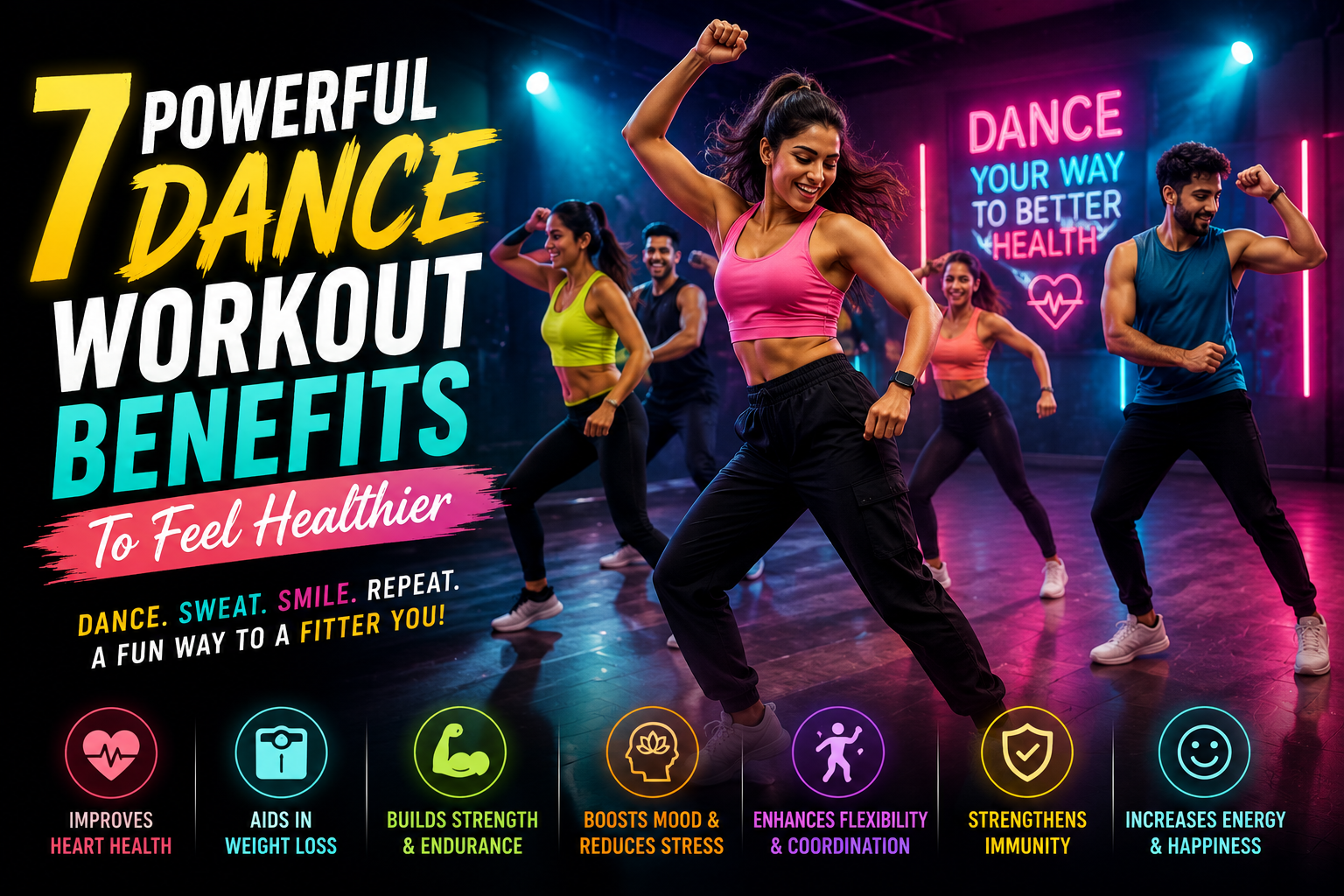
7 Powerful Dance Workout Benefits to Feel Healthier
Exercise does not have to mean running endlessly on a treadmill, counting repetitions in a gym, or forcing yourself through a routine you already know you will quit after a few weeks. For many people, movement becomes much easier to maintain when it feels enjoyable. That is where a dance workout can make a real difference.
A dance workout combines music, rhythmic movement and physical exercise into one active experience. Depending on the style and intensity, it can improve cardiovascular fitness, challenge coordination, build stamina and help you stay physically active. More importantly, it can make exercise feel less like a daily punishment and more like something you genuinely look forward to doing.
You also do not need to be a trained dancer to begin. You do not need perfect rhythm, advanced choreography or years of dance experience. A good dance workout can be adapted for beginners as well as people who already have experience with fitness or dance.
Current physical-activity guidance recognises dancing as a form of aerobic activity, with intensity ranging from moderate to vigorous depending on how you move. aerobic physical activity
In this article, we will look beyond the usual “dance is fun and burns calories” explanation. You will understand what happens during a dance workout, the seven major benefits it can offer, how calorie burn actually works, whether it can support weight management, and how beginners can start safely.
What Is a Dance Workout?
A dance workout is a structured form of exercise that uses dance-inspired movement, rhythm and music to keep the body physically active. Some sessions focus mainly on continuous cardio, while others combine dance movements with squats, lunges, jumps, core exercises or high-intensity intervals.
The important difference between casually dancing in your room and following a structured dance workout is purpose. A workout is designed to keep you moving at a level of intensity that challenges your body. The session may gradually increase your heart rate, work different muscle groups and include periods of higher and lower intensity.
A typical dance workout can include stepping, side movements, turns, body isolations, arm patterns, squats, lunges and other full-body movements. The choreography does not have to be complicated. In fact, some of the most effective beginner sessions use simple movements that are repeated long enough for participants to become comfortable and physically active.
Different forms of dancing can also involve different levels of physical intensity. The Compendium of Physical Activities lists different energy-intensity values for activities ranging from social and recreational dancing to aerobic and more vigorous forms of dance.
That means there is no single definition of how hard every dance workout will feel. A slow, low-impact class and a high-energy dance cardio session can be completely different experiences. Your own fitness level also matters. A movement that feels easy to one person may feel challenging to someone who is just beginning.
If you want to understand the broader role of movement and expression before exploring dance fitness, you can also read What Is Dance
How Does a Dance Workout Actually Work?
A dance workout works by encouraging repeated, continuous body movement. Depending on the structure of the session, your heart rate may gradually rise, your breathing may become faster and your muscles repeatedly work to support movement, balance and coordination.
Imagine starting with simple steps and arm movements. As the music changes, the movements become larger and faster. You may begin moving in different directions, adding squats or lunges between dance combinations, and then temporarily slow down before starting another high-energy section. This variation can keep the session physically challenging without making the workout feel repetitive.
A well-planned dance workout generally has a natural flow rather than jumping randomly from one movement to another. The structure may include preparation, progressive intensity, higher-energy sections, active recovery and a gradual cool-down.
1. Warm-Up
The session begins with lighter movement to prepare the body. This may include marching, shoulder movements, gentle steps, arm circles and mobility exercises.
2. Dance Cardio
The main dance workout section usually involves sustained movement to music. The goal is to keep the body active while following simple or choreographed movement patterns.
3. Fitness Intervals
Some dance fitness programs include bodyweight movements such as squats, lunges or other exercise variations between or within dance sections. This creates additional variation and can increase the physical challenge.
4. Active Recovery
After a higher-intensity section, the pace may temporarily decrease. You continue moving, but at a lower intensity.
5. Cool-Down
The session gradually slows down with controlled movements and stretching.
This combination of rhythm, movement and changing intensity is what makes a dance workout more than simply learning choreography.
1. A Dance Workout Can Improve Cardiovascular Fitness
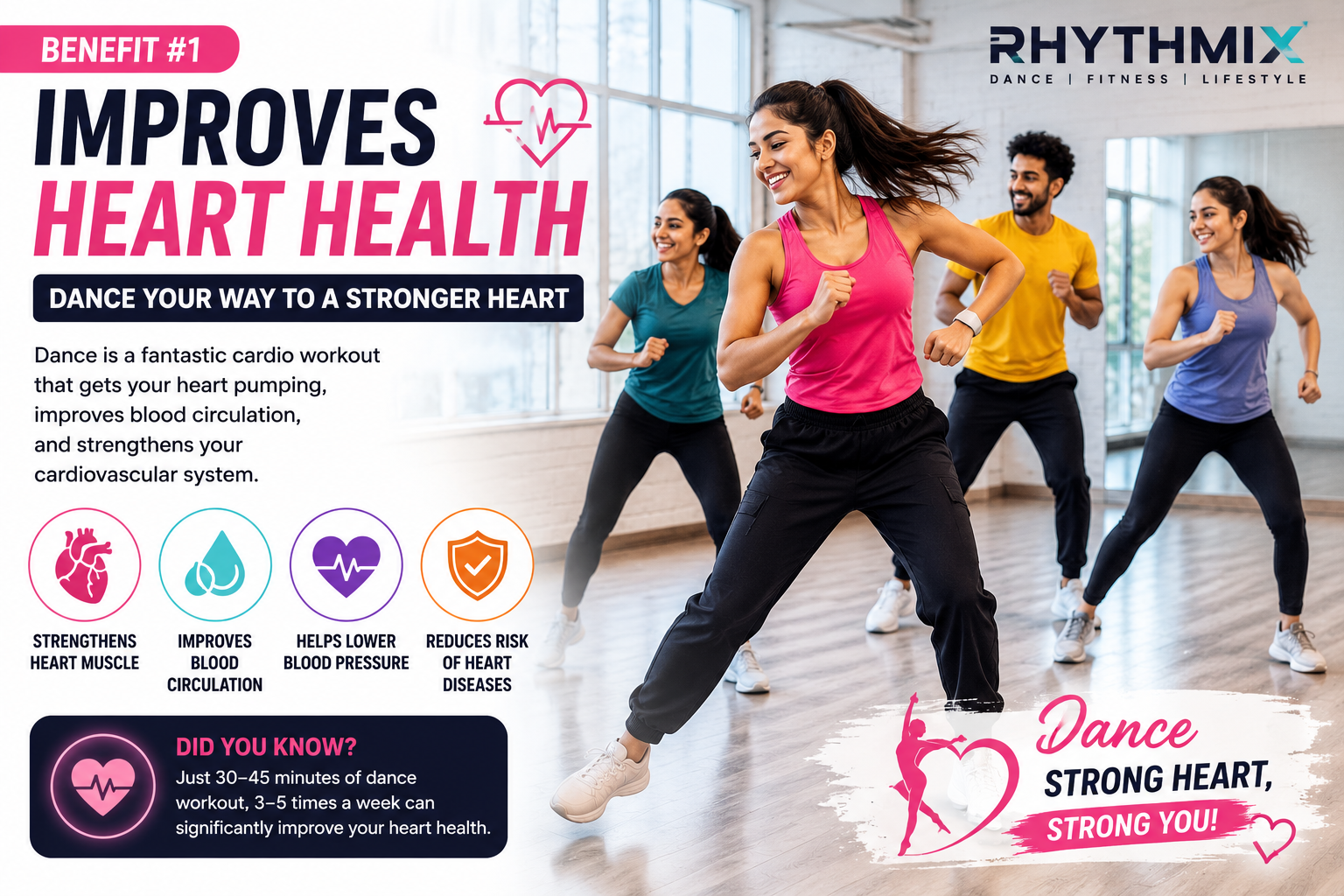
One of the most important benefits of a dance workout is its potential to improve cardiovascular fitness. When you move continuously for a sustained period, your heart and lungs work harder to supply oxygen to the muscles that are supporting your movement.
The exact intensity depends on the type of dance workout you are doing. A beginner-friendly low-impact session may keep you at a moderate level, while a fast dance cardio session with larger movements and minimal rest can become much more demanding.
The American Heart Association includes dancing among forms of aerobic activity. dancing . The important point is that intensity matters. Simply moving occasionally to music is different from maintaining an active pace for a sustained period.
Over time, regular physical activity can support heart health and cardiorespiratory fitness. A dance workout can therefore become one enjoyable way to contribute to your overall weekly activity.
The biggest advantage is that music can help the session feel less repetitive. Instead of focusing entirely on how tired you are, your attention may shift toward the rhythm, the next movement or simply enjoying the song.
2. A Dance Workout Can Build Stamina and Endurance
Stamina is your ability to continue an activity without becoming exhausted too quickly. When you first start a dance workout, even 20 or 30 minutes of continuous movement may feel challenging. You may need breaks, your breathing may increase quickly and your legs may feel tired.
That is completely normal.
As your body gradually adapts to regular activity, you may notice that movements which initially felt difficult become easier to perform. You may be able to move longer before needing a break or recover more comfortably between high-energy sections.
This is why consistency matters more than trying to perform an extremely intense dance workout on your first day.
You do not have to push yourself to the point of exhaustion every time. A realistic approach is to begin with manageable sessions and gradually increase the duration or intensity as your fitness improves.
A person who starts with two 20-minute sessions per week and continues for several months may see more long-term progress than someone who performs an extremely difficult workout for three days and then stops completely.
The best fitness routine is not necessarily the hardest one. It is the one you can realistically continue.
3. A Dance Workout Can Improve Balance, Coordination and Body Control
A dance workout requires more than simply moving your arms and legs. Many movements involve shifting your body weight, changing direction, following rhythm and coordinating different parts of the body at the same time.
For example, you may step to the right while moving your arms in a completely different pattern. You may have to turn, change direction and then remember the next movement while staying connected to the beat.
This combination challenges coordination.
Regular movement and physical activity can support balance and coordination, while dancing specifically requires body control, timing and spatial awareness. balance and coordination
Body awareness is another useful benefit. As you practice a dance workout, you may become more conscious of how you shift your weight, how you use your arms, how your posture changes and how your movements connect.
For beginners, this improvement can initially feel slow. You may know what movement you want to perform, but your body may not immediately follow your intention. With repeated practice, coordination can improve gradually.
This is one reason you should not judge your first session too harshly. Feeling awkward in the beginning does not mean you are incapable of dancing or exercising. It simply means your body is learning a new movement pattern.
4. A Dance Workout Can Support Calorie Burning and Weight Management
This is probably one of the most searched questions related to a dance workout: How many calories can I burn?
The honest answer is that there is no single number.
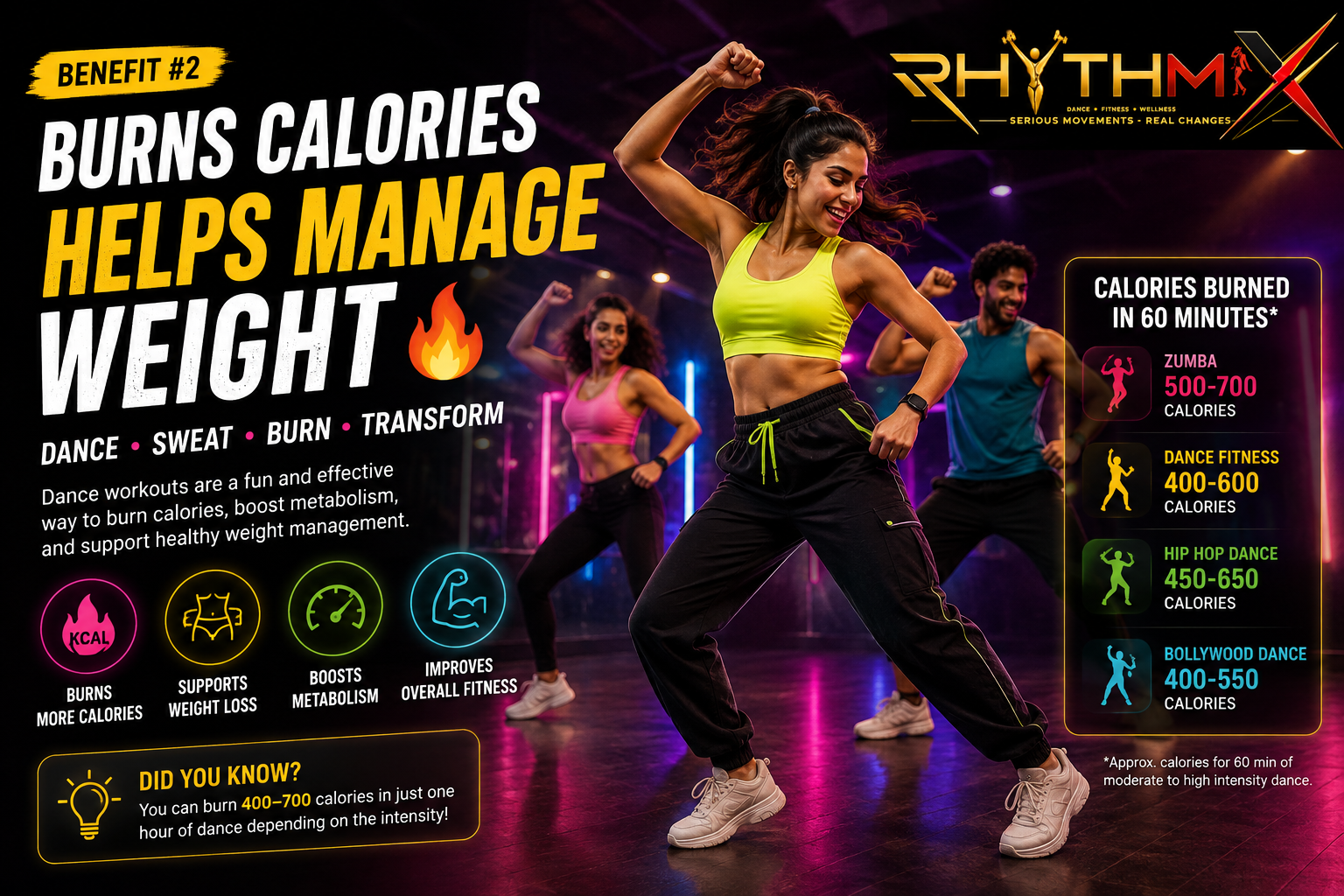
Calories burned during dancing can vary depending on your body size, the intensity of the session, the type of movements, workout duration and your individual physiology. A 20-minute low-impact session will naturally have a different energy demand from a 60-minute high-energy dance workout involving continuous movement and fitness intervals.
The Compendium of Physical Activities also demonstrates that different forms of dancing can have different intensity levels.
This is why you should be cautious when you see online claims such as, “Burn exactly 800 calories in one dance session.” Such numbers cannot apply equally to everyone.
A dance workout can contribute to overall energy expenditure, but calorie burning alone does not guarantee weight loss. Long-term weight management is influenced by multiple factors, including overall food intake, physical activity, sleep and individual circumstances.
The goal should not be to chase the highest possible calorie number after every workout.
A better approach is to find an activity you enjoy enough to repeat consistently. If a dance workout makes you more physically active than a workout routine you constantly avoid, it may become a valuable part of your lifestyle.
For a detailed guide specifically focused on fat loss and realistic expectations, read Dance Workout for Weight Loss
5. A Dance Workout Can Strengthen Muscles and Improve Body Awareness
A dance workout can involve several parts of the body at once. Depending on the movements, your legs may support repeated squats and directional changes, your core may help maintain stability, and your upper body may stay active through arm movements and coordination.
However, it is important to keep this benefit realistic.
A dance workout is not automatically a replacement for a dedicated strength-training program. If your specific goal is to maximise muscular strength or build a large amount of muscle, progressive resistance training may be more appropriate.
But that does not mean dance-based movement cannot challenge your muscles.
Repeated bodyweight movements, controlled positions, jumps, lunges and other exercises can require muscular effort. A well-designed dance fitness workout may combine rhythmic movement with exercises that create a more complete full-body challenge.
Dance can also improve your awareness of how your body moves. You may start noticing your posture, the way you stand, how you shift your weight or whether one side of your body feels less coordinated than the other.
This awareness can be valuable not only during a dance workout, but also when learning choreography or developing general movement confidence.
6. A Dance Workout Can Support Mood and Mental Well-Being
The benefits of a dance workout are not limited to muscles and cardiovascular fitness.
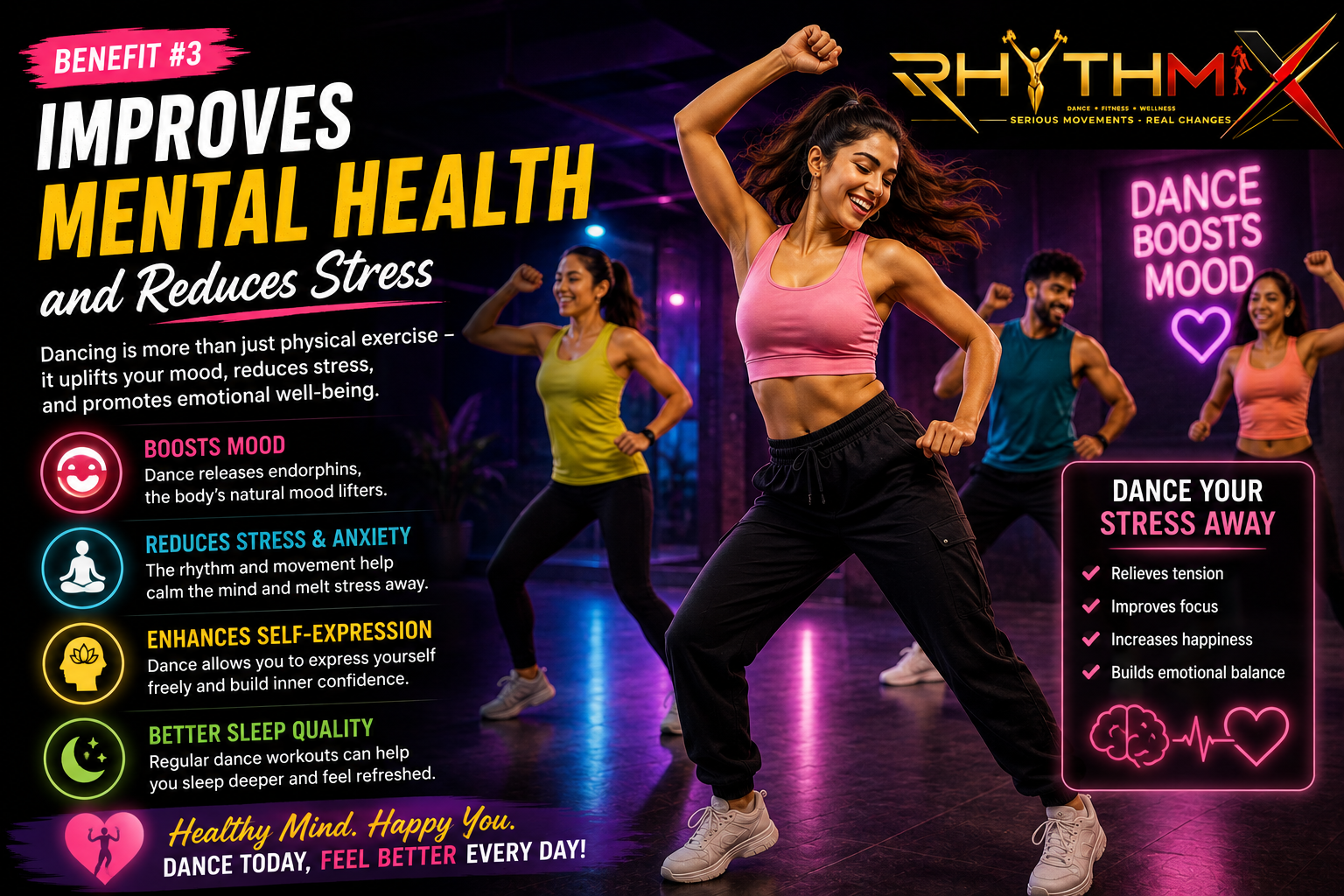
Regular physical activity is associated with both physical and mental health benefits. The CDC’s physical activity guidance highlights benefits that can include improved sleep, reduced anxiety and broader mental and physical health support.
A dance workout adds another element to the exercise experience: music.
Music can change the atmosphere of movement. A difficult physical activity may feel different when you are following a rhythm or enjoying a song. You may become focused on learning the next step rather than constantly watching the clock.
Group sessions can add a social element as well. Moving alongside other people can create energy and motivation that is difficult to reproduce when exercising alone.
Of course, a dance workout is not a medical treatment for mental health conditions. But as part of an active lifestyle, enjoyable physical activity can support overall well-being.
Sometimes the biggest psychological benefit is simply changing your relationship with exercise.
Instead of thinking, “I have to work out again,” you may begin to think, “I want to hear the next song.”
That difference can be surprisingly powerful when you are trying to build a long-term routine.
7. The Biggest Dance Workout Benefit: You May Actually Enjoy Exercise
This benefit may sound less scientific than cardiovascular fitness or calorie expenditure, but from a long-term fitness perspective, it is extremely important.
A perfect workout plan has little value if you stop following it.
Many people start a fitness routine with motivation. They buy new workout clothes, create a schedule and promise themselves that this time they will remain consistent. But after a few weeks, boredom can become a major problem.
A dance workout offers variety. Different songs can create a different atmosphere. Movement patterns can change. One session may focus more on cardio, while another may include more fitness intervals.
This variety can help prevent exercise from feeling identical every day.
Enjoyment alone does not magically guarantee results. You still need appropriate intensity, regular participation and an overall healthy lifestyle. But enjoyment can make consistency easier.
If you enjoy moving, you are more likely to keep moving.
That is the reason this benefit deserves to be included alongside the more traditional health benefits of a dance workout.
Dance Cardio Workout vs Traditional Cardio: What Is the Difference?
A dance cardio workout and traditional cardio can both provide aerobic exercise. The main difference is often the experience and structure.
Traditional cardio may include running, cycling, swimming or using a cardio machine. These activities can be effective, but they are not automatically enjoyable for everyone.
A dance cardio workout uses music and changing movement patterns to keep the body active. Instead of repeating the same motion for an extended period, you may perform steps, directional changes, arm movements and fitness combinations.
Neither option is automatically better for everyone.
Running may be ideal for someone training for a race. Cycling may be easier for someone who prefers low-impact activity. A dance workout may be more suitable for someone who enjoys music, variety and group energy.
The best option depends on your goals, preferences and ability to remain consistent.
How Many Calories Does a Dance Workout Burn?
A dance workout can burn calories because your body uses energy to perform movement. However, the exact amount varies significantly.
The most important factors include:
- Your body size
- Workout duration
- Intensity
- Type of movement
- Amount of rest
- Your individual fitness level
A gentle beginner session and a high-energy dance workout should not be expected to produce the same calorie expenditure.
Instead of asking only, “How many calories did I burn?”, consider asking:
Did I move enough to challenge myself appropriately?
Can I continue this routine consistently?
Am I gradually improving my stamina or movement ability?
These questions often provide a more useful picture of progress.
The calories burned dancing can vary because different dance activities involve different levels of physical intensity.
Can a Dance Workout Help You Lose Weight?
A dance workout can be part of a weight-management routine because it contributes to physical activity and energy expenditure. However, it is important to avoid the idea that a single type of exercise automatically produces weight loss.
Weight change is influenced by multiple factors.
Your overall diet, daily activity, sleep, consistency and individual circumstances all play a role. That is why two people performing the same dance workout may not experience exactly the same results.
The advantage of dance-based exercise is that it can help some people become more active without forcing themselves into a routine they dislike.
If you enjoy dancing and perform a dance workout consistently, it may be easier to maintain than a traditional exercise routine you repeatedly quit.
For a more detailed discussion, including realistic expectations and how to structure dance-based exercise for fat-loss goals, see Dance Workout for Weight Loss [Internal Link: /dance-workout-for-weight-loss/].
Different Types of Dance Workouts
Not every dance workout follows the same format. The style, intensity and purpose can vary depending on the instructor and program.
Low-Impact Dance Workout
A low-impact dance workout reduces high-impact movements such as jumping. You can still move continuously while using steps, slides and controlled movements.
This can be a useful option for beginners or people who prefer lower-impact exercise.
Dance Cardio Workout
A dance cardio workout focuses mainly on sustained movement. The pace may vary, but the goal is generally to keep the body active for a significant part of the session.
Dance Fitness Workout
A dance fitness workout combines dance movement with fitness exercises. You may perform rhythmic steps along with squats, lunges, core movements or other bodyweight exercises.
High-Energy Dance Workout
A high-energy dance workout may include faster movements, larger ranges of motion, quick footwork and more demanding exercise intervals.
Dance Workout at Home
A dance workout at home can provide flexibility when you cannot attend an in-person session. You do not necessarily need a large room, but you should have enough safe space to move without hitting furniture or slipping.
Group Dance Workout
A group dance workout adds an element of shared energy. Some people find that exercising around others helps them stay motivated and makes the experience more enjoyable.
How Often Should You Do a Dance Workout?
There is no single schedule that is perfect for everyone.
Your ideal dance workout frequency depends on your current fitness level, the intensity of each session and how well your body recovers.
A beginner might start with two or three sessions per week. Someone with more experience may include dance-based activity more frequently while balancing different levels of intensity.
Current adult physical-activity guidance recommends at least 150 minutes of moderate-intensity aerobic activity per week or 75 minutes of vigorous activity, along with muscle-strengthening activity on two or more days each week. physical activity guidelines for adults
A dance workout can contribute toward this activity depending on its intensity.
You do not need to complete all of your activity in one session. A sustainable weekly routine may include dance workouts, walking and other forms of exercise.
The goal is to build a pattern you can maintain.
Who Should Try a Dance Workout?
A dance workout can be suitable for many different people because movements and intensity can often be modified.
It may be particularly appealing if you:
- Get bored with repetitive workouts
- Enjoy music
- Want to improve coordination
- Prefer group exercise
- Want a beginner-friendly way to become more active
- Are looking for an alternative to traditional cardio
However, not every dance workout is appropriate for every individual. If you have an injury, medical condition or concern about starting a new exercise routine, it is sensible to seek appropriate professional guidance and choose an intensity suitable for your situation.
How to Start a Dance Workout as a Beginner
If you have never danced before, the easiest mistake is to watch experienced dancers and assume you need to move exactly like them.
You do not.
Start with simple movements.
Learn basic steps before trying to master a complete routine. Focus on staying connected to the rhythm rather than performing every movement perfectly.
A beginner dance workout can start with:
- Marching or stepping in place
- Side-to-side movement
- Simple arm patterns
- Basic bodyweight movements
- Slow combinations before increasing speed
Do not be embarrassed if you need to repeat a movement several times. Repetition is how coordination develops.
The best way to improve is to stay patient and gradually increase the challenge.
Common Dance Workout Mistakes to Avoid
A dance workout should challenge you without making the experience unnecessarily frustrating.
One common mistake is skipping the warm-up and immediately attempting maximum-intensity movement. Give your body time to prepare.
Another mistake is trying to perform every movement perfectly from the beginning. Focus first on the general pattern and rhythm. Precision can improve with practice.
Some people also make the opposite mistake: they choose a workout that is far too easy because they are afraid of looking awkward. It is okay to start simple, but gradually challenge yourself as your confidence improves.
Finally, do not compare your first dance workout with someone else’s hundredth session.
Everyone begins somewhere.
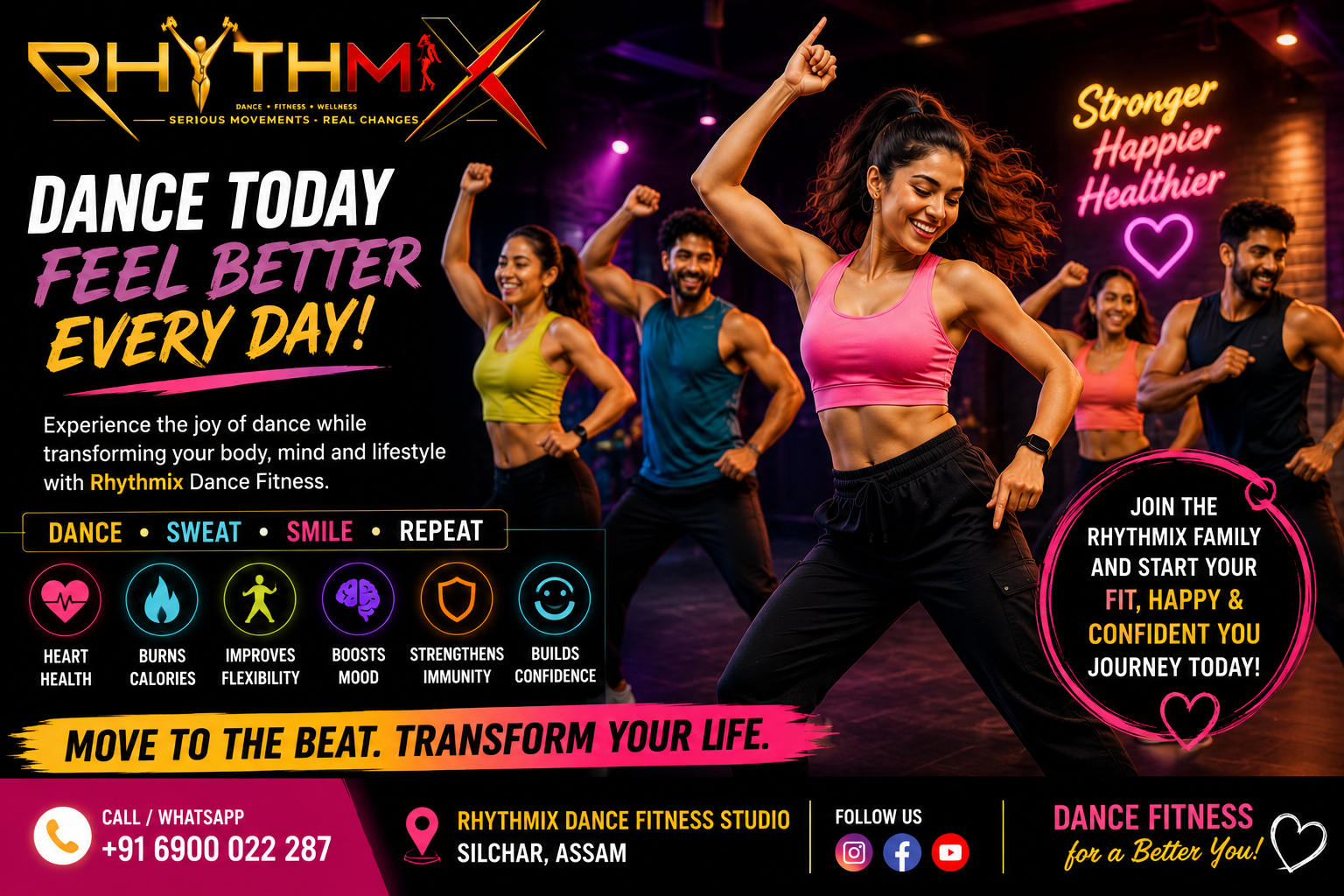
Dance Workout at Rhythmix: Move, Sweat and Enjoy the Experience
At Rhythmix, we believe fitness does not have to feel disconnected from enjoyment.
A dance workout can combine the energy of music with purposeful movement and fitness variation. Instead of simply repeating the same exercise pattern, participants can experience changing rhythms, movement combinations and higher-energy sections designed to keep the session engaging.
Our approach to Dance Fitness [Internal Link: /dance-fitness/] focuses on movement, rhythm and an enjoyable group experience.
We also offer Ignite Dance Workout [Internal Link: /ignite-dance-workout/], a rhythm-based fitness experience that combines dance movement with fitness variations and high-energy intervals.
If you are in Silchar and want to experience group-based movement and fitness in a supportive environment, explore Dance Classes in Silchar [Internal Link: /dance-classes-in-silchar/].
The goal is not to make every participant perform like a professional dancer.
The goal is to help you move, build confidence and enjoy the process.
Frequently Asked Questions About Dance Workout
Is a dance workout good exercise?
Yes. A dance workout can be a useful form of physical activity. Depending on the intensity, it may contribute to aerobic exercise and help improve overall fitness. aerobic activity recommendations
Can beginners do a dance workout?
Yes. Beginners can start with simple movements, lower-impact variations and shorter sessions. You do not need previous dance experience to begin a dance workout.
How many calories does a dance workout burn?
The calories burned during a dance workout depend on factors such as body size, intensity, duration and movement style. There is no single number that applies to everyone.
Can I do a dance workout every day?
Some people may be able to include dance-based movement frequently, but your schedule should depend on workout intensity and recovery. Higher-intensity sessions may require more recovery than gentle movement.
Is dance cardio good for weight loss?
A dance cardio workout can contribute to physical activity and energy expenditure, which may support weight management as part of an overall lifestyle. However, no single workout guarantees weight loss.
Do I need to know how to dance before joining a dance workout?
No. A dance workout can be adapted for beginners. The goal is to start moving and gradually improve coordination rather than performing every step perfectly.
Can I do a dance workout at home?
Yes. A dance workout at home can be a convenient option if you have enough safe space to move. Choose a beginner-friendly session and start with movements appropriate for your current fitness level.
Is a Dance Workout Worth Trying?
A dance workout can offer much more than a temporary calorie-burning session. It can support cardiovascular fitness, improve stamina, challenge coordination, encourage physical activity and make movement feel more enjoyable.
The exact benefits you experience will depend on how often you participate, how intensely you move and how your overall lifestyle supports your fitness goals.
But one thing is worth remembering: you do not need to exercise in the same way as everyone else.
Some people enjoy running. Others prefer lifting weights. Some people find their motivation through sports, cycling or yoga. And for many people, music and movement may be the reason they finally find an exercise routine they can enjoy consistently.
A dance workout may not replace every other form of exercise, and it does not need to. It can become one valuable part of an active lifestyle.
So if traditional workouts have never excited you, put on some music, start moving and give a dance workout a genuine chance.
If you want a structured, energetic and rhythm-based fitness experience, explore Ignite Dance Workout and discover a different way to move at Rhythmix in Silchar.